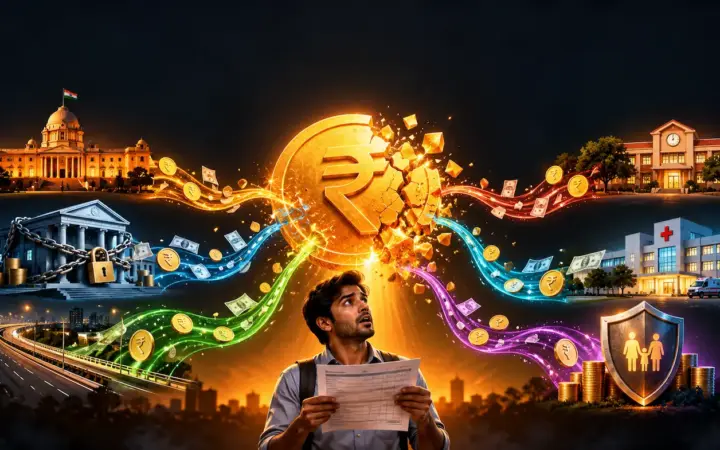
India Economy · Education · Career Reality
For many young Indians, the difficult question is no longer simply, “Which degree should I pursue?”
It is: “After investing so much in my education, why am I still struggling to build the life I worked for?”
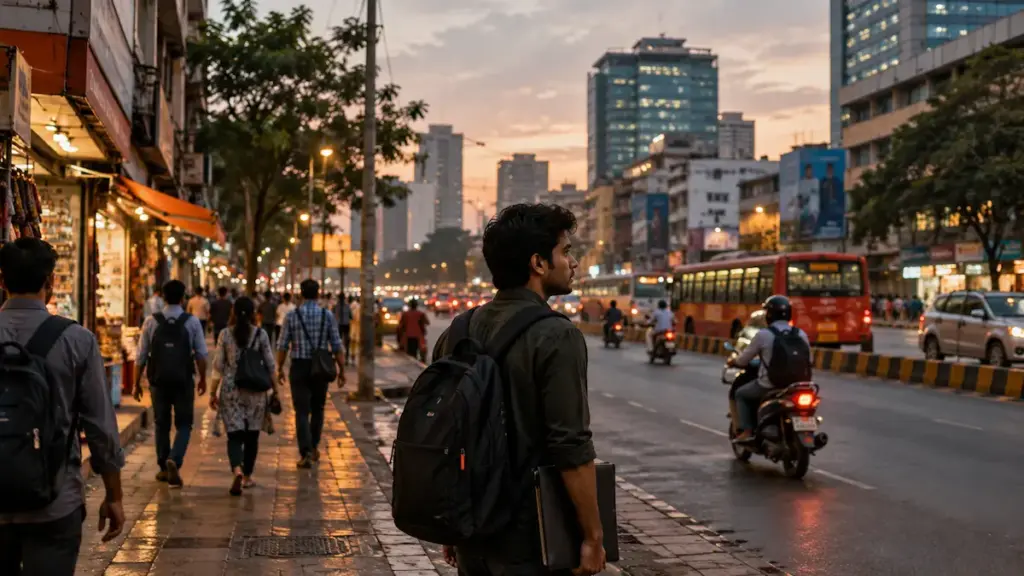
The problem of educated Indians struggling to find jobs is not a story about one student making a mistake. It is a question about the relationship between education, employment, and opportunity in India.
A degree can provide knowledge, open doors, and improve career prospects. But a degree alone cannot guarantee a suitable job, a good salary, or financial independence.
To understand why, we need to look beyond the college classroom and examine the system that connects education to work. For more analysis like this, explore our India economy and education coverage on NxtBharat.
The Central Idea
- A qualification is an investment, but its outcome depends on more than the certificate.
- Educated Indians struggling to find jobs is a system problem involving job creation, skills, work experience, and the transition from education to employment.
- Students need better information before choosing a course, while institutions and employers need stronger links to real work.
- The solution is not to reject education. It is to make education more valuable in practice.
The Promise We Attach to a Degree
For many Indian families, education is much more than a qualification. It is a route towards security.
Parents may spend years saving for college fees. Some students move to another city, pay rent, attend coaching classes, or take education loans. Families often accept these expenses because they believe the sacrifice will lead to a better future.
There is nothing unreasonable about that hope. Education can increase knowledge, develop professional abilities, and create opportunities that might otherwise be unavailable.
The problem begins when the degree itself becomes the destination instead of one step towards a career.
A student may ask which college offers the most impressive name, which course their friends are choosing, or which qualification sounds prestigious. But other questions can be equally important: What jobs do graduates actually obtain? What skills do employers require? How much practical experience does the course provide? What is the realistic cost of the qualification compared with likely earnings?
When these questions are ignored, a student may complete a course without a clear picture of the opportunities available afterwards. The result is not always unemployment. Sometimes it is a job unrelated to the degree, work that pays less than expected, or years spent preparing for another examination.
This is one quiet reason behind educated Indians struggling to find jobs even after years of study.
Why Are Educated Indians Struggling to Find Jobs? What the Numbers Say
Personal stories help us understand the problem of educated Indians struggling to find jobs. Official statistics help us measure part of it.
India’s Periodic Labour Force Survey (PLFS) provides an important starting point. According to the Government of India’s annual PLFS report for July 2023 to June 2024, the unemployment rate among people aged 15 and above who had completed secondary education or higher was 7.1% under the survey’s usual-status measure. The rate for the whole population aged 15 and above was 3.2%.
These figures come from different educational and age groups, so they should not be treated as interchangeable. The 7.1% figure does not describe graduates alone, and the youth figure includes young people with different levels of education.
Nevertheless, the figures help explain why the issue of educated Indians struggling to find jobs deserves serious attention, especially the transition from education into employment. The official survey also shows that unemployment rates differ by education level, gender, and whether people live in rural or urban areas.
The International Labour Organization and the Institute for Human Development examined this broader challenge in their India Employment Report 2024, which explores youth employment, education, and skills.
The lesson is not that education is useless. It is that educational attainment and successful entry into suitable employment are two different outcomes.
Educated Indians Struggling to Find Jobs: Why Education and Employment Do Not Connect
Imagine a college that teaches a student the theory behind a profession but gives them little opportunity to apply it. The student graduates with a certificate, while an employer is searching for someone who can complete practical tasks from the first few weeks of work.
Both may be acting reasonably. The student completed the prescribed course. The employer needs someone ready for a specific role. Yet the gap between what was taught and what the job requires creates a difficult transition.
This is often described as a skills mismatch. It can occur when a person has studied a subject but lacks some of the practical, technical, communication, or problem-solving abilities needed for a particular job.
Skills mismatch is one reason for educated Indians struggling to find jobs, but it is only part of the story. Even a capable graduate needs an employer with an available position. Training more people for a profession cannot, by itself, guarantee that enough suitable jobs will exist.
The World Bank highlighted both skills mismatch and the need to improve employment opportunities in its February 2026 announcement concerning India’s Industrial Training Institutes. Its programme focuses on making training more closely aligned with labour-market needs.
That matters because the challenge has two sides: helping people become prepared for work and creating enough productive work for them to enter.
A qualification is not the same as demonstrated ability
Consider two graduates applying for an entry-level digital marketing position. Both hold similar degrees. One can discuss marketing concepts but has never worked on a campaign. The other has created a small portfolio, analysed campaign results, written sample content, and explained what they learned from mistakes.
The second candidate has given the employer evidence of practical ability. That does not guarantee the job, and the first candidate may have other strengths. But it gives the employer more information than the degree alone can provide.
This is why internships, projects, apprenticeships, supervised practice, and portfolios can matter. They help connect what someone knows with what they can actually do.
The Hidden Cost of Choosing the Wrong Path
Now return to our fictional graduate. The family has paid the fees. The student has spent several years studying. There may also have been travel costs, accommodation, exam preparation, and income the student could not earn while studying.
These expenses matter, but for educated Indians struggling to find jobs, the full cost is bigger than the money already spent.
It also includes the time required to find suitable work, the opportunities missed while following one path, and the pressure of making another decision without knowing what went wrong.
This is where an important economic idea becomes useful: opportunity cost.
Opportunity cost means the value of the best alternative you give up when you make a decision. If a student spends three years pursuing one route, the cost is not only the fees. It also includes the other realistic options that the time and money could have supported.
This does not mean every student should choose the cheapest course or start earning as early as possible. Some professions require years of formal education, and some qualifications have long-term benefits that are not immediately visible. The point is to compare options honestly before committing.
Students and parents should examine course quality, recognition, total expenses, realistic career paths, and the experiences of previous graduates. They should also ask whether the course develops transferable abilities that remain useful if the original career plan changes.
The Psychology Behind the Degree Trap
There is another side to educated Indians struggling to find jobs: the way people make decisions about education and careers.
Families do not choose courses using spreadsheets alone. They are influenced by social expectations, fear of failure, the success stories they hear, and the desire to give their children a better life.
Understanding these influences can help students make more informed decisions.
The prestige effect: when the name matters more than the outcome
A famous college or prestigious qualification can signal quality, and in some situations it can provide valuable networks and opportunities. But prestige is not the same as a guaranteed career outcome.
When people focus only on a college’s reputation, they may overlook whether the teaching is strong, whether students receive practical experience, or whether the qualification fits their goals.
A better decision compares the actual benefits of a course with its costs. Reputation can be one factor, but it should not be the entire decision.
The sunk-cost trap: “I’ve already spent so much, so I cannot change”
Imagine a student who has spent years preparing for one competitive examination. The student is not making progress, but quitting feels like wasting everything already invested.
This is a version of the sunk-cost problem. Money and time already spent cannot be recovered simply by continuing. The decision should instead consider what is likely to happen from today onwards.
That does not mean a student should abandon a difficult goal at the first setback. Persistence can be valuable. The better approach is to establish a review point: examine progress, understand the odds, assess financial constraints, and decide whether to continue, change strategy, or pursue an alternative.
The compounding effect: small practical steps can build an advantage
Many people wait until graduation to think seriously about work. But useful career evidence can accumulate over time.
A student who regularly practises a relevant skill, completes small projects, seeks feedback, and improves communication may gradually build a stronger profile. One project may be modest. Several projects, combined with learning and reflection, can demonstrate a pattern of growth.
This is similar to the general principle of compounding: repeated improvements can build on one another. It is an analogy, not a promise that a fixed percentage of daily improvement will guarantee a job or produce a precise mathematical outcome.
The practical lesson is simple: career preparation does not need to wait until the final semester.
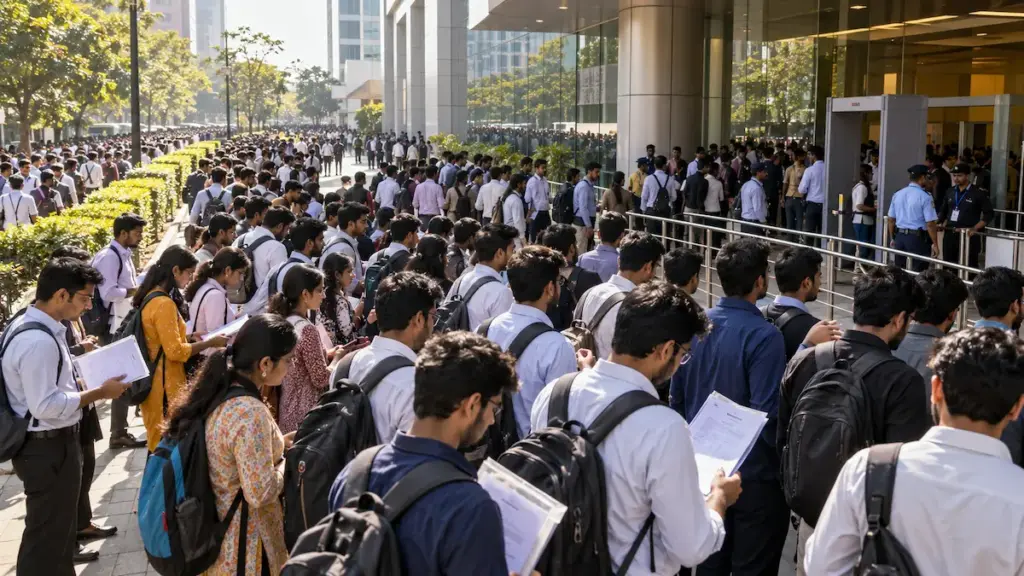
Why the Quality of a Job Matters, Not Just the Number of Jobs
Suppose our graduate, one of the many educated Indians struggling to find jobs, finally gets a job. The family celebrates, and the long search appears to be over.
But what if the work pays too little to cover basic expenses? What if it offers no learning, no reasonable stability, or no path towards the career the graduate trained for?
The person is employed, but the original goal may still be out of reach.
This distinction matters because employment and good employment are not identical. A person can have a job and still face financial insecurity, limited advancement, or a mismatch between their education and their work.
When evaluating India’s job challenge, it is useful to ask more than whether people are employed. We should also consider earnings, working conditions, job security, productivity, skill use, and opportunities for advancement.
It is equally important to recognise that a first job does not have to be perfect. Entry-level work can be a valuable learning stage. The concern is whether workers have a realistic opportunity to develop their skills and improve their circumstances over time.
What Needs to Change to Help Educated Indians Struggling to Find Jobs?
It is tempting to put the entire responsibility on students and tell them to learn more skills. Practical learning matters, but that explanation is incomplete.
A student cannot create a job vacancy that does not exist. A college cannot solve every labour-market problem on its own. An employer cannot hire every qualified applicant. The challenge requires several parts of the system to work together.
- Courses that offer too little practical experience
- Career guidance that does not reflect real job requirements
- Employers seeking experience from people who have had few chances to gain it
- Limited access to quality opportunities in some locations and fields
- Students choosing courses without enough reliable outcome information
- Practical projects, apprenticeships, and meaningful internships
- Better career guidance and transparent course outcomes
- Entry-level hiring that recognises potential and transferable skills
- Stronger job creation and pathways into productive work
- Regular feedback between employers and educational institutions
Educational institutions need to show what students can actually do
Colleges should help students connect theory with practice. Depending on the field, that may mean laboratories, supervised clinical experience, technical projects, writing portfolios, internships, or industry-linked assignments.
Institutions should also communicate course costs, recognition, completion rates, and available employment information as transparently as possible. Students need to make decisions using evidence rather than promotional claims alone.
Employers need to help build the entry-level talent they want to hire
Employers often need workers who can contribute quickly. Yet if every entry-level vacancy demands extensive previous experience, new graduates may struggle to get their first opportunity.
Structured internships, apprenticeships, realistic entry-level requirements, and training within the workplace can help bridge that gap. These approaches require investment, but they can also help employers reach educated Indians struggling to find jobs and develop talent suited to their actual needs.
India needs both better skills and enough productive jobs
Training can improve a person’s chances, but it is not a substitute for job creation. A country needs businesses that expand, industries that become more productive, services that meet genuine demand, and opportunities across different regions and skill levels.
India’s employment challenge is therefore not simply a question of whether young people have studied enough. The issue of educated Indians struggling to find jobs is also a question of whether the economy is creating enough suitable opportunities for the people entering its workforce.
The World Bank’s work on India’s skills-training system highlights the importance of aligning training with labour-market needs. The broader challenge is to connect this preparation with actual opportunities for employment and advancement.
How Students and Families Can Avoid the Degree Trap
Students cannot control every part of the economy, but they can improve the quality of their decisions. That matters when educated Indians struggling to find jobs has become such a common worry. The aim is not to predict the future perfectly. It is to reduce avoidable risks and keep more options open.
Research the career before paying the fees
Start with the work you hope to do, rather than beginning with a course advertisement. Look at real job descriptions, the qualifications employers request, typical entry-level responsibilities, and the skills that appear repeatedly.
Speak with people who actually work in the field. Ask recent graduates about their experience, while remembering that one person’s success or disappointment may not represent everyone.
Calculate the total cost, not just the college fee
Include tuition, accommodation, travel, equipment, coaching, exam fees, and other likely expenses. If the course requires a loan, understand the repayment terms and how repayments could affect future choices.
Then compare the total cost with realistic career scenarios. Avoid making the calculation using only the highest salary package advertised by an institution.
Build evidence of ability before graduation
Choose projects and practice opportunities that demonstrate skills relevant to the intended career. A project should show what was attempted, what decisions were made, what problems arose, and what was learned.
Students should also practise explaining their work clearly. Communication, teamwork, reliability, and problem-solving can matter alongside technical knowledge.
Review the plan regularly
A career decision made at age eighteen does not have to determine every year that follows. As students learn more about a field, they can reassess their interests, finances, abilities, and opportunities.
Set reasonable checkpoints to review progress. If an approach is not working, identify the reason before deciding whether to persist, change methods, gain more experience, or explore another path.
Keep transferable skills and alternative routes in view
Writing, analysis, digital literacy, communication, and the ability to learn new tools can be useful across multiple occupations. They do not replace specialised qualifications where those are required, but they can help people adapt when circumstances change.
Alternative routes are not necessarily failures. Vocational training, apprenticeships, professional certifications, further study, and different entry-level roles may all be appropriate depending on a person’s circumstances and goals.

A Better Way to Think About Education and Money
Education is often discussed as if its value can be judged by one question: “How much salary will I get after completing this course?”
Salary is important, especially for families making a major financial commitment. But a thoughtful decision considers several factors together: the cost of the course, the probability of completing it, the range of career options it opens, the skills it develops, and the flexibility it provides later.
This is also where incentives matter. A college may be rewarded for attracting students. A student may be influenced by social prestige. A family may focus on the most visible success story. An employer may prioritise immediate productivity.
When these incentives do not line up, everyone can make a decision that appears reasonable from their own perspective while the overall transition from education to employment remains difficult.
Better information can help reduce the number of educated Indians struggling to find jobs. So can transparency about course outcomes, honest career guidance, and opportunities for students to test their interests before making large commitments.
There is no perfect formula for choosing a career. But there is a meaningful difference between making a decision based on evidence and making one based mainly on fear, pressure, or promises.
The Bigger Question India Needs to Ask
Return to the graduate from the beginning of this story.
Perhaps the student finds a suitable job after gaining practical experience. Perhaps they change fields. Perhaps they continue studying, take an alternative route, or discover that the original plan was not the right fit.
There is no single ending that applies to every graduate. The important point is that the outcome for educated Indians struggling to find jobs should not depend entirely on luck, family connections, or discovering the rules of the job market only after years of study.
Students deserve clearer information about their choices. Colleges should help them develop abilities that transfer into work. Employers should create credible entry points for new talent. Policymakers need to pay attention to both the quality of skills and the availability of productive jobs.
And families should be able to discuss career decisions honestly without treating every change of direction as a failure.
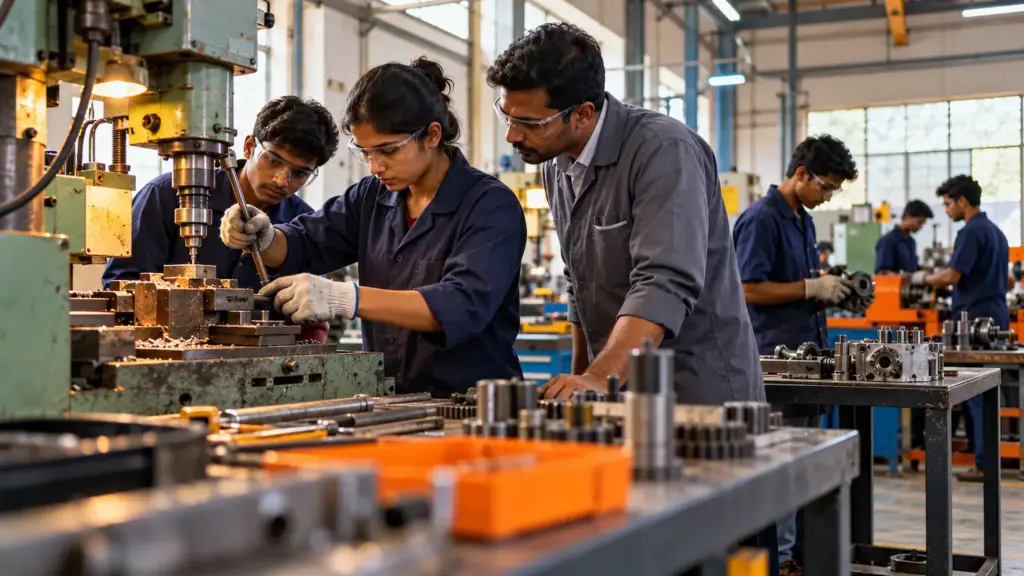
Final Word: A Degree Should Open a Door, Not End the Journey
India’s educated youth do not need to be told that hard work matters. Many have already spent years working towards a better future. The reality of educated Indians struggling to find jobs is not about a lack of effort.
What they need is a stronger connection between the effort they invest, the abilities they develop, and the opportunities available to them.
A degree can be valuable. Practical skills can make that education more useful. Good career information can help families choose wisely. And a growing economy needs to create productive work where people can apply their knowledge.
The real question is not whether Indians should pursue education. It is whether we are doing enough to ensure that education leads to meaningful opportunities.
If a young person studies for years but cannot see a realistic path towards the life they were promised, we should not stop at asking what that person did wrong. We should also examine the institutions, incentives, and economic conditions surrounding them.
Because the purpose of education should be more than earning a certificate. It should be helping people build the knowledge, independence, and capability to shape their future.
Frequently Asked Questions
Sources and Further Reading
The following sources provide official statistics and research on India’s employment, education, and skills challenges. The statistics cited in this article refer to the specific reporting periods and populations described.
- Periodic Labour Force Survey, 2023–24 — Government of India
Official labour-market indicators, including unemployment by education level.
Read the annual PLFS reports. - India Employment Report 2024 — ILO and Institute for Human Development
Research on youth employment, education, and skills in India.
Read the report details. - World Bank — India’s Skills Training and Employment Challenge, February 2026
Discussion of skills mismatch and efforts to align training with labour-market needs.
Read the announcement.
Editorial note: The opening character is fictional and illustrative. It is not presented as an actual graduate’s testimony. The article’s interpretation and practical suggestions are analysis, while the numerical claims are attributed to the relevant published reports.